Elbow Bursitis (Olecranon Bursitis)
Elbow bursitis — also called olecranon bursitis — is one of the most common reasons people come to Midwest Orthopaedics at Rush with a swollen elbow. If the tip of your elbow has swelled up, feels like it has fluid in it, or has become red and painful, our elbow specialists can evaluate it and talk through the options that fit your situation.
MOR’s elbow physicians are fellowship-trained orthopedic surgeons who treat the full range of elbow conditions, from nonsurgical management through complex reconstruction. The practice’s orthopedic program was ranked No. 9 in the nation in the 2026–2027 U.S. News & World Report Best Hospitals rankings.
What Elbow Bursitis Is
The olecranon bursa is a thin, fluid-filled sac that sits between the skin and the bony point at the back of the elbow. Normally it is flat and lets the skin move freely over the bone. When it is irritated — by a direct blow, by leaning on the elbow for long periods, by infection, or in association with conditions such as gout or rheumatoid arthritis — it can fill with fluid and swell. Bursitis is a different problem from the tendon conditions that cause pain on the inner or outer elbow, such as tennis elbow and golfer’s elbow, and the two are evaluated differently.
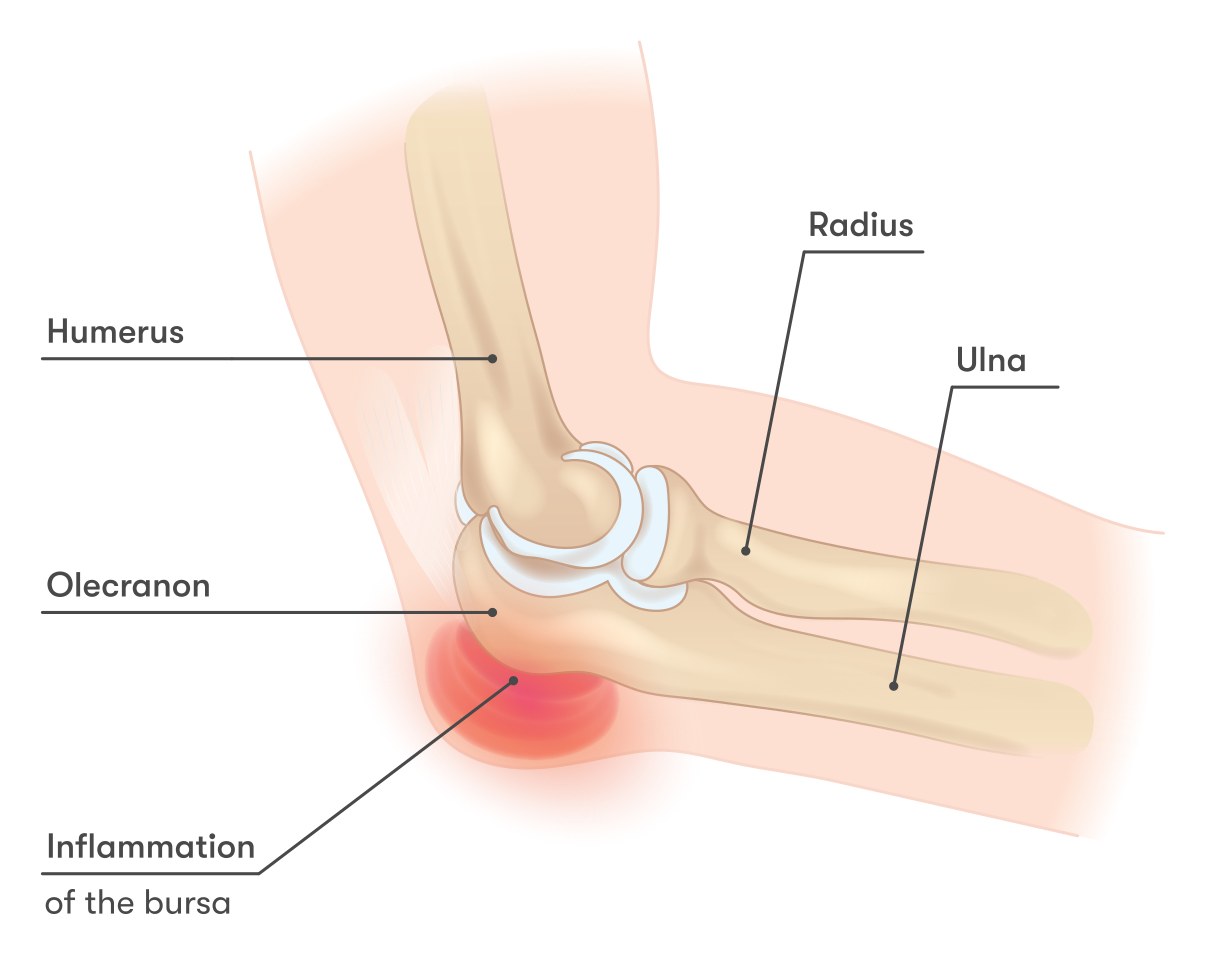
Elbow Bursitis Symptoms
The signs our surgeons look for include:
- Swelling or a soft bump at the tip of the elbow, which may build up over time
- Fluid on the tip of the elbow
- Pain or tenderness, often worse when leaning on the elbow or bending it fully
- Redness over the back of the elbow
- Loss of motion if the swelling becomes large
Swelling that is warm, red, and painful — particularly after a cut, scrape, or puncture on the elbow — may indicate an infected bursa and should be evaluated promptly.
What We Offer for Elbow Bursitis
Care is matched to your evaluation — your physician will determine what is appropriate for you. Options available through MOR’s elbow service include:
- Activity modification and protective padding
- Oral medications
- Drainage of the bursa (aspiration) and fluid testing
- Steroid injection
- Antibiotic treatment when infection is present
- Physical therapy and occupational therapy
- Elbow surgery, including removal of the bursa, for bursitis that does not respond to other treatment or that is infected
Elbow Bursitis at Work
Elbow bursitis is often a work-related condition. Leaning on the tip of the elbow for long periods on a hard surface — the position plumbers, heating and air-conditioning technicians, and other trades work in when crawling through tight spaces — can irritate the bursa gradually over weeks or months, and a direct blow to the elbow on the job can do it all at once. Office work is not exempt: resting the elbow on a hard armrest or tabletop through the day has the same effect.
When a swollen elbow is tied to a work injury, the same elbow team handles the evaluation, treatment, and return-to-work planning through MOR’s workers’ compensation program, which is set up to schedule the evaluation quickly and coordinate care with the goal of returning you to work with full strength and function.
Meet the Elbow Team
All Midwest Orthopaedics at Rush physicians are fellowship-trained. Twelve orthopedic surgeons see elbow patients across the practice’s offices, with both nonsurgical and surgical care available. The elbow team works alongside specialty nurses, physician assistants, and rehabilitation therapists, and includes the surgeons who serve as team physicians for the Chicago Bulls and Chicago White Sox.


Requesting an Appointment
You can request an appointment online, or view the full list of MOR office locations to find the one most convenient for you.
This page describes services offered by Midwest Orthopaedics at Rush and is not medical advice. Elbow swelling has several possible causes, and only an in-person evaluation can determine which one applies to you. Please consult a physician about your own symptoms.